
Technical evidence
Examine privileged access, public exposure, policy exceptions and available security recommendations. Where used, Defender for Cloud findings inform the review without treating a posture score as proof that risks are resolved.
Review technical and operational risks around cloud workloads. Prioritize findings by business impact and define owners for follow-up actions.
Plan your solution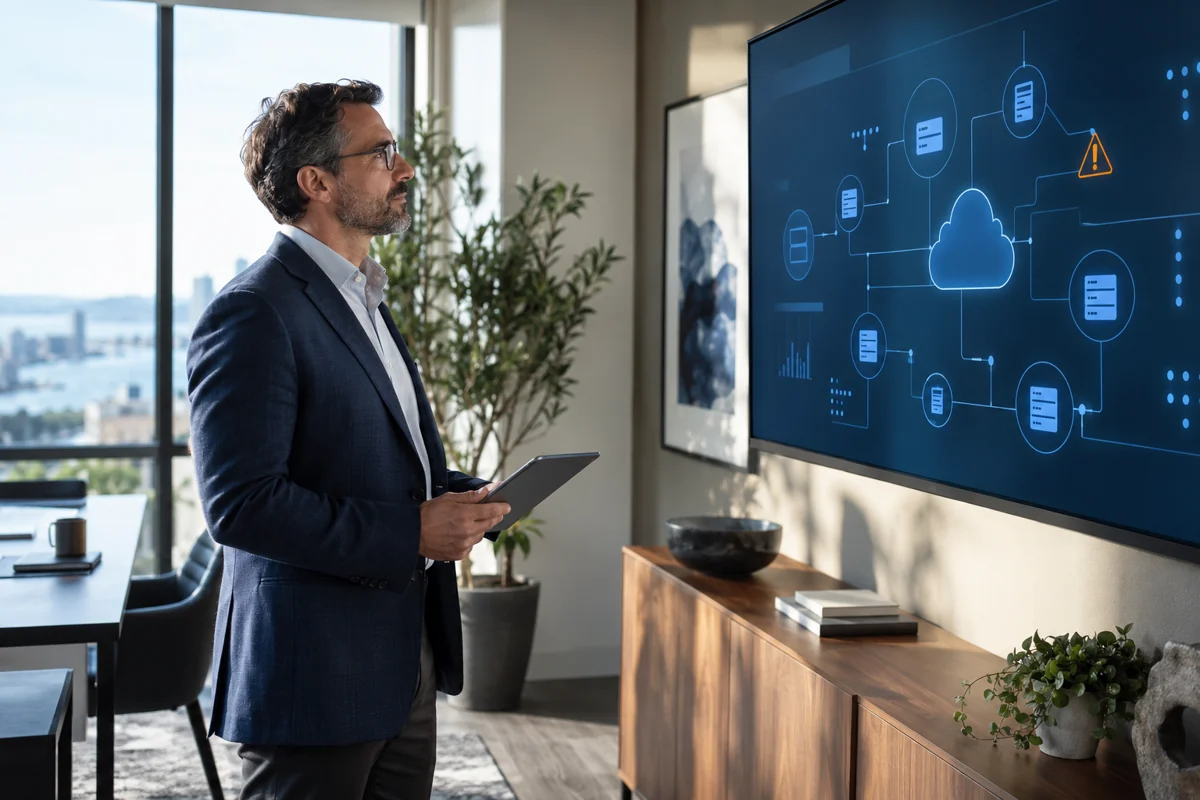
A cloud risk assessment connects observed Azure settings to the consequences for particular workloads. Digital Cloud can review an agreed subscription scope, relevant evidence and operational procedures. Automated findings are interpreted alongside business criticality so the output explains what could fail, why it matters and which action deserves attention first.
A cloud environment needs identity, networking, governance, monitoring and recovery arrangements alongside the workloads it hosts. A useful architecture makes operating responsibilities and cost drivers visible from the beginning.
Examine privileged access, public exposure, policy exceptions and available security recommendations. Where used, Defender for Cloud findings inform the review without treating a posture score as proof that risks are resolved.
Inspect backup evidence, alert ownership and critical dependencies. Compare documented recovery objectives with the tests actually performed, including who can authorize containment or restoration.
Record the affected asset, plausible event, existing safeguards and proposed treatment. Distinguish urgent configuration fixes from architecture changes and assign an accountable owner to each agreed action.
An application may have protected data storage but an overprivileged deployment identity; the assessment can explain that combined exposure and propose a more constrained release path.
The final deliverables, licensing and responsibilities are agreed for your environment before implementation.
Inventory applications and data, agree downtime tolerance and recovery objectives, and review spending. Validate access boundaries, backup coverage and operational ownership before expanding the environment.
We begin with a conversation about the task, the people involved and the systems already in place. Together we identify what a useful result would look like and which dependencies need attention first. The agreed proposal sets the delivery boundaries, responsibilities and acceptance criteria.
| Project phase | What happens |
|---|---|
| 01Establish the baseline | Confirm the systems, evidence and access needed for the review. Record the current configuration and relevant business constraints before drawing conclusions. |
| 02Prioritize findings | Explain findings in terms of impact and practical effort. Separate confirmed issues from assumptions and identify the owner who can validate each recommendation. |
| 03Plan corrective action | Agree on a prioritized action plan, identify dependencies and define how improvements will be verified. Changes are implemented only within the agreed scope and authorization. |
No. A configuration and operational risk review is different from authorized adversarial testing. Any active security testing requires its own defined scope and rules.
The starting environment, integrations, user groups and agreed outputs determine the effort. We confirm scope and commercial terms before work begins. Software licenses, infrastructure consumption and ongoing support may be separate items.
The proposal identifies the deliverables: these may include findings, a prioritized roadmap, a tested configuration, a prototype, documentation or training. We agree what is included and how completion will be assessed.
We review the actual applications, data sources and access requirements before recommending an integration. Dependencies and compatibility limits are recorded so the delivery plan reflects your environment.
You can use the findings to guide your own team or discuss a follow-on phase. Any maintenance, monitoring or support includes separately agreed service hours, responsibilities and response targets.